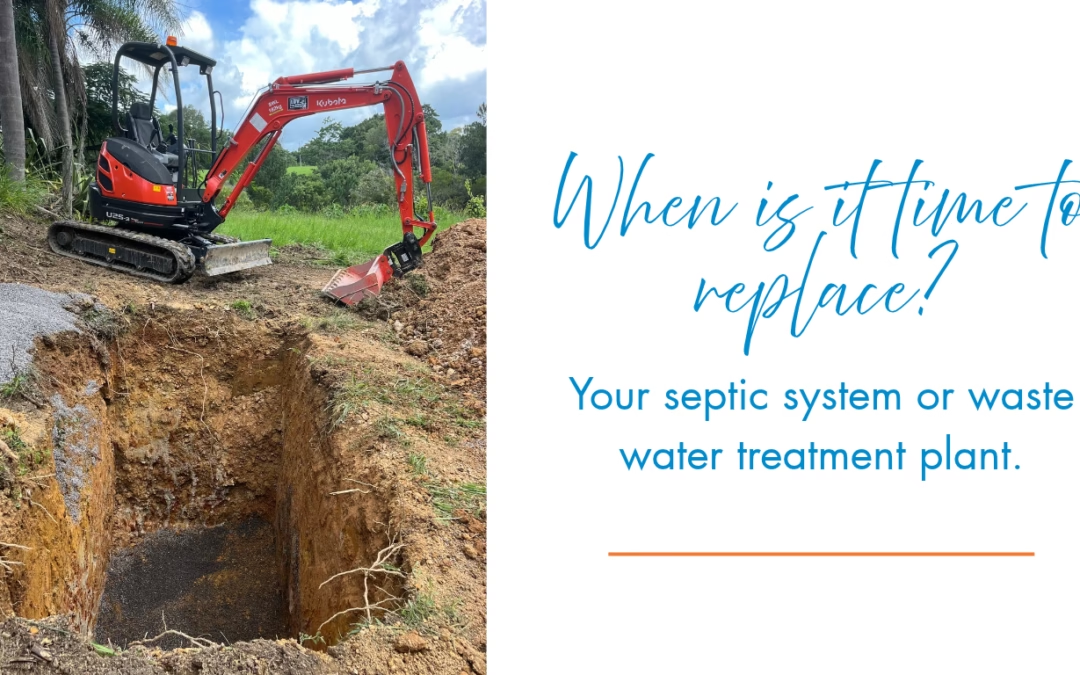
For many rural homeowners, an onsite wastewater treatment system is something they don’t think about too often – until something goes wrong.
Whether you have an older septic system or an aerated wastewater treatment plant (AWTS), these systems require ongoing maintenance to operate effectively. Over time, components wear out, technology becomes outdated and the system may no longer be suitable for the property’s needs.
But how do you know when it’s time to upgrade your wastewater treatment system rather than continue paying for repairs?
There are several warning signs worth looking out for.
1. You’re experiencing repeated breakdowns and repairs
One of the clearest signs that your wastewater treatment system may be nearing the end of its useful life is a pattern of recurring problems.
You might find yourself regularly dealing with:
-
Frequent alarm activations.
-
Pump failures or electrical faults.
-
Blower or aerator problems.
-
Damaged or deteriorating components.
-
Persistent odours around the treatment system.
-
Wastewater backing up or overflowing.
While individual components can often be repaired or replaced, repeated breakdowns can indicate that the system itself is deteriorating.
If repair costs are becoming increasingly frequent, it may be worth comparing the ongoing cost of maintaining the existing system against the cost of installing a new one.
2. Your wastewater treatment system is getting older
Like any mechanical system, wastewater treatment plants have a finite working life.
Older systems can become increasingly difficult and expensive to maintain, particularly when replacement components are no longer readily available or the original system design is outdated.
Even if an older system is still operating, it doesn’t necessarily mean it’s operating as efficiently or reliably as it should.
An assessment by a qualified plumbing and wastewater professional can help determine whether the system is suitable for continued use or whether an upgrade should be considered.
3. Your system is struggling to keep up with household demand
Wastewater treatment systems are designed around particular capacity requirements.
If your household has grown, you’ve added bedrooms, increased occupancy or made changes to how the property is used, your existing system may no longer be adequately sized for the demand being placed on it.
Signs of potential capacity issues include:
-
Frequent high-level alarms.
-
Wastewater taking longer to process.
-
Recurring overflows.
-
Problems following periods of increased household use.
An upgrade may involve installing a system with a more suitable treatment capacity, depending on the property’s requirements and site conditions.
4. You’re experiencing ongoing wastewater or drainage issues
Sometimes the problem isn’t immediately obvious.
A wastewater treatment system may appear to be functioning normally, but underlying issues with drainage, disposal areas or connections can affect its performance.
For example, stormwater entering a wastewater system can introduce additional water and debris, placing unnecessary strain on the treatment process.
Heavy rainfall can also expose drainage and disposal problems, particularly where groundwater levels rise or disposal areas become saturated.
It’s important to identify the underlying cause before deciding whether an upgrade is necessary. In some cases, correcting an existing drainage issue may resolve the problem without replacing the treatment plant.
5. Your existing system is no longer suitable for your property
Properties change over time, and sometimes the wastewater system that was originally installed is no longer the most appropriate solution.
This can happen when:
-
A property undergoes renovations or extensions.
-
Additional bedrooms or bathrooms are added.
-
Household occupancy increases.
-
The original system is no longer compliant with applicable requirements.
-
Changes to the property or site conditions affect wastewater disposal.
In these situations, an assessment can help establish whether the existing system can continue to be used, requires modifications or should be replaced with a more suitable wastewater treatment solution.
Repair or replace: Which option makes more sense?
Not every wastewater problem requires a complete system upgrade.
In some cases, replacing a faulty pump, repairing a connection or addressing a drainage issue may be all that’s needed.
However, if your system is ageing, experiencing frequent failures or no longer suitable for the property’s requirements, continuing to repair individual components may not be the most practical long-term solution.
Before making a decision, it’s worth considering:
-
The age and overall condition of the existing system.
-
The frequency and cost of previous repairs.
-
The availability of replacement components.
-
Whether the system has sufficient treatment capacity.
-
Whether the disposal area is functioning correctly.
-
The cost and suitability of an upgraded system.
A professional assessment can help you understand your options and make an informed decision.
Upgrading your wastewater treatment system
Installing a new wastewater treatment system involves more than simply replacing the existing unit.
The right solution will depend on several factors, including the size of the household, site conditions, soil characteristics, available disposal areas and relevant local authority requirements.
Depending on the property, an upgrade may involve:
-
Removing or decommissioning the existing system where required.
-
Installing a new aerated wastewater treatment plant.
-
Upgrading pumps, pipework and associated connections.
-
Reviewing or modifying the wastewater disposal area.
-
Ensuring the installation meets applicable Queensland requirements.
Every property is different, which is why an assessment of the existing system and site conditions is an important first step.
A recent example from a local property
Recently, our team attended an acreage property in Pomona where the owners were experiencing wastewater system overflow alarms every time it rained.
Rather than immediately recommending a replacement system, we carried out a dye test to investigate the issue.
The test identified that stormwater was incorrectly connected to the septic system. This meant that whenever it rained, additional water and debris were entering the system, placing unnecessary strain on it and contributing to the overflow alarms.
By identifying the source of the problem, we were able to install a bypass to redirect the stormwater and prevent it from entering the septic system.
This is a good example of why identifying the underlying cause of wastewater problems is so important. Sometimes the solution isn’t replacing the entire system – it’s finding and fixing the issue that’s affecting its operation.
Need advice about upgrading your wastewater system?
If your wastewater treatment plant is ageing, experiencing frequent breakdowns or struggling to keep up with your household’s needs, it may be time to look at your options.
At Plumbing & Gas Services Pomona, we provide wastewater treatment system installations, upgrades and associated plumbing services throughout Pomona, the Noosa Hinterland, Gympie and the wider Sunshine Coast.
We can assess your existing setup, discuss potential solutions and help you determine the most suitable option for your property.
Contact Plumbing & Gas Services Pomona to discuss your wastewater treatment system or arrange an assessment.
LOOKING TO ORGANISE A QUOTE
CALL NOW
Contact us today for expert advice and assistance!