
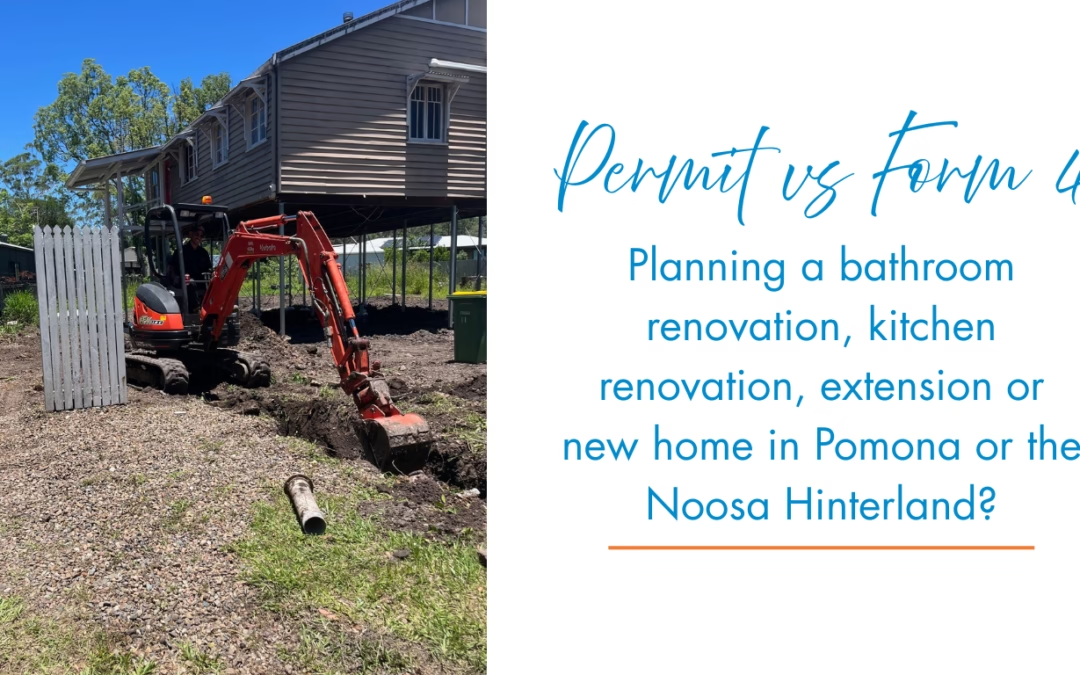
Planning a bathroom renovation, kitchen renovation, extension or new home in Pomona or the Noosa Hinterland? One question that often comes up is:
“Do I need a plumbing permit, or does my plumber just lodge a Form 4?”
The answer depends on the type of plumbing and drainage work being carried out and whether you are working on an existing building or constructing something new.
While both a plumbing permit and a Form 4 relate to regulated plumbing and drainage work in Queensland, they are not the same thing.
A plumbing permit is an approval that may be required before certain plumbing and drainage work starts. A Form 4 is generally used to notify the Queensland Building and Construction Commission (QBCC) that certain notifiable plumbing work has been completed.
Understanding the difference can help you plan your renovation or new build properly and avoid delays.
What is a plumbing permit?
A plumbing permit is an approval required for certain types of plumbing and drainage work before the work begins.
Permit work is generally assessed by the relevant local government, and the work is subject to inspection.
Queensland’s plumbing regulations classify work into different categories, including:
- Permit work
- Notifiable work
- Minor work
- Unregulated work
If plumbing work falls into the permit-work category, a permit application needs to be made before the work starts.
For example, plumbing and drainage work associated with the construction of a new building is generally permit work rather than notifiable work.
What is a Form 4?
A Form 4 is a notification of notifiable plumbing work.
It is not a permit and it does not replace a permit where one is required.
Notifiable work is commonly plumbing and drainage work carried out in an existing building. Examples can include:
- Bathroom renovations
- Kitchen renovations
- Altering existing water supply pipework
- Altering existing sanitary plumbing
- Altering certain sanitary drainage
- Installing or relocating fixtures such as toilets, showers, basins and kitchen sinks
- Replacing or installing a hot water system
- Installing or replacing certain temperature control devices
For this type of work, a licensed plumber can generally carry out the work without first obtaining a local government plumbing permit, provided the work meets the requirements for notifiable work. The plumber then registers the work with the QBCC using a Form 4.
The QBCC states that notifiable work must generally be registered within 10 business days of issuing the invoice for the work.
Your plumber should also provide you with a copy of the Form 4.
So, what’s the difference?
The easiest way to think about it is:
Plumbing permit = approval before certain work starts.
Form 4 = notification that certain notifiable work has been completed.
They serve different purposes.
Plumbing permit |
Form 4 |
| Required for certain permit work. | Used for notifiable work. |
| Generally required before work starts. | Lodged after the notifiable work is completed. |
| Application made to the relevant local government | Registered with the QBCC |
| Permit work is subject to inspection. | Notifiable work does not require the same local government permit/inspection process. |
| Commonly applies to new construction and other permit work. | Commonly applies to plumbing work in existing buildings. |
The exact classification depends on the work being carried out, so it is important not to assume that every renovation automatically requires a Form 4 or that every new build requires the same type of approval.
What about bathroom renovations?
If you’re renovating an existing home, plumbing work such as installing or relocating a shower, toilet or basin, or altering existing plumbing, may fall into the notifiable-work category.
For example, if you are renovating your existing bathroom and moving the shower and basin to different positions, your plumber may be able to complete the plumbing work as notifiable work and lodge a Form 4 with the QBCC.
That means you don’t necessarily need to obtain a plumbing permit simply because you’re undertaking a major bathroom renovation.
However, the building work itself may have separate approval requirements. Plumbing requirements and building approval requirements are not necessarily the same thing.
This is an important distinction when planning a renovation.
What about a kitchen renovation?
The same principle can apply to kitchen renovations.
Installing or relocating fixtures such as a kitchen sink and altering existing plumbing may fall within the categories of notifiable work for an existing Class 1 building.
Your plumber will assess the work and determine which category applies.
What about a house extension?
Extensions can be a little more complicated.
Queensland’s notifiable-work categories include certain plumbing work associated with an extension to an existing Class 1 building. This means that some plumbing work connected with a home extension can still be notifiable rather than permit work.
Instead, the plumbing work needs to be assessed according to its specific circumstances and classification.
There may also be separate building approval requirements for the extension itself.
What about a brand-new home?
This is where the rules generally change.
Plumbing and drainage work associated with new construction is not notifiable work. It is generally treated as permit work.
That means a new home will generally involve plumbing and drainage plans and the relevant permit process before the plumbing work begins.
A permit application may require supporting documentation, such as plans showing proposed plumbing fixtures and other information depending on the building and proposed work.
This is one reason it is important to involve your plumber early when planning a new build.
What about replacing a hot water system?
Replacing a hot water system at an existing home is commonly classified as notifiable work.
This can include electric, gas, solar and heat-pump hot water systems.
In these circumstances, your licensed plumber should register the notifiable work with the QBCC and provide the relevant Form 4.
However, different rules can apply depending on the circumstances of the property and the work being undertaken, so your plumber should confirm the correct classification.
What about septic systems and treatment plants?
If you live on a rural property around Pomona, Cooroy, the Noosa Hinterland or surrounding areas, there is another important consideration: on-site sewerage systems.
Septic systems and treatment plants can involve additional approval and compliance requirements.
The plumbing and drainage permit process includes specific provisions for on-site sewerage work, and some work may require applications or documentation beyond a standard bathroom or kitchen renovation.
If you’re upgrading an existing septic system, installing a treatment plant or changing your property’s wastewater arrangements, it’s worth getting advice before commencing work.
Do you need a permit or Form 4 for your renovation?
The best way to determine what applies is to look at the actual plumbing work, rather than simply whether you call the project a renovation or new build.
For example:
Existing bathroom + new shower, toilet and basin:
May be notifiable work → Form 4.
Existing home + replacement hot water system:
Generally notifiable → Form 4.
New home construction:
Plumbing and drainage work associated with the new construction → generally permit work.
New septic or wastewater treatment plant upgrade:
Plumbing and drainage work associated with the upgrade → always permit work.
Major or unusual plumbing/drainage project:
May require a permit depending on the work and building circumstances.
Minor repairs or maintenance:
May fall into the minor-work category and may not require either a permit or Form 4.
These are examples rather than a substitute for assessing the specific project. Queensland has defined categories of notifiable work, permit work and minor work, and the correct classification depends on the work being performed.
Why does the distinction matter?
Getting the classification right matters for both homeowners and builders.
Using the wrong process can potentially cause delays, compliance issues and problems later when you need to demonstrate that plumbing work was carried out correctly.
A Form 4 also creates a record of the notifiable plumbing work completed at the property.
If you’re buying or selling a property, these records can be useful because the QBCC maintains records of registered notifiable work.
Planning a renovation or new build in Pomona?
If you’re planning a bathroom renovation, kitchen renovation, home extension, new build or plumbing upgrade in Pomona or the Noosa Hinterland, it’s worth talking to your plumber before work starts.
At Plumbing & Gas Services Pomona, we can help determine what plumbing and drainage requirements apply to your project and make sure the appropriate documentation is completed for the work we undertake.
Whether your project involves a bathroom renovation, new fixtures, hot water, drainage, underground plumbing or a rural property wastewater system, getting the plumbing requirements sorted early can make the rest of the project much easier.
Planning a renovation or new build? Get in touch with Plumbing & Gas Services Pomona on 0404 657 047 to discuss your plumbing and drainage requirements.
This article provides general information about Queensland plumbing and drainage requirements. Approval requirements can vary depending on the property, building classification and proposed work. Your licensed plumber and the relevant local government should be consulted for project-specific requirements.
LOOKING TO ORGANISE A QUOTE
CALL NOW
Contact us today for expert advice and assistance!